As I await to schedule my doctoral defense, I’m preparing a bit of a lofty goal this Spring. I’d like to write and submit five journal articles. Three of them will be based on my dissertation, one will be from a data set I didn’t use in my dissertation, and another would be based on something else entirely.
So I’m perusing all the math, education, and math education journals to find a potential home for my articles. And a good number of them are promoting their call for articles in a Special Issue devoted to A.I. in education. And because published articles are outright currency in higher ed, these calls will receive submissions. Some of the deadlines have already passed; there’s a slew of them coming this year.
There’s one problem: A.I. in the hands of educators hasn’t been around that long. ChatGPT was released to the public in November of 2022, just over a year ago. It’s hard to imagine that we can do this much quality research when we barely understand the tools.
But, like I said, these calls for papers will get heeded. So what kinds of research will these journals be publishing? I have two predictions.
A heavy emphasis on adult learning, pre-service teaching, and professional development; less emphasis on student learning
It takes a while to get Institutional Review Board (IRB) to conduct research on minors, to say nothing of obtaining parental consent. It’s much easier (and faster) to get approval and consent to conduct research on adults. It’s why there’s a preponderance of doctoral dissertations and journal articles on pre-service teachers and relatively few on students (I, perhaps foolishly, am attempting the latter with my dissertation). If you need to do research fast, you do the research on adults.
Misrepresentations: calling anything marginally generative an “A.I platform”
Another way to get research done fast on A.I. is by just calling anything A.I. Like I said, ChatGPT has been available for only a short while, so the claim that anything teachers are using incorporates A.I. is dubious. It’s likely that research will rename any adaptive program as A.I. to satisfy these journals. In fact, you can even see the rinsing in real time.
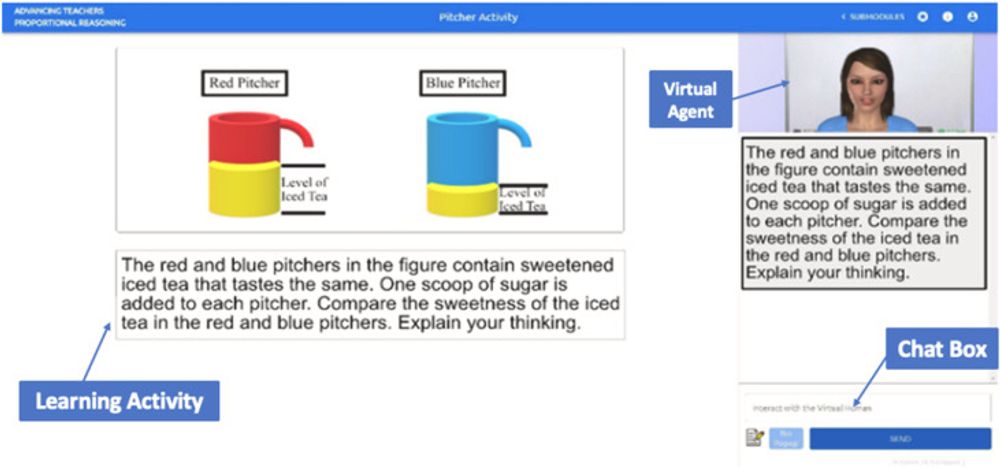
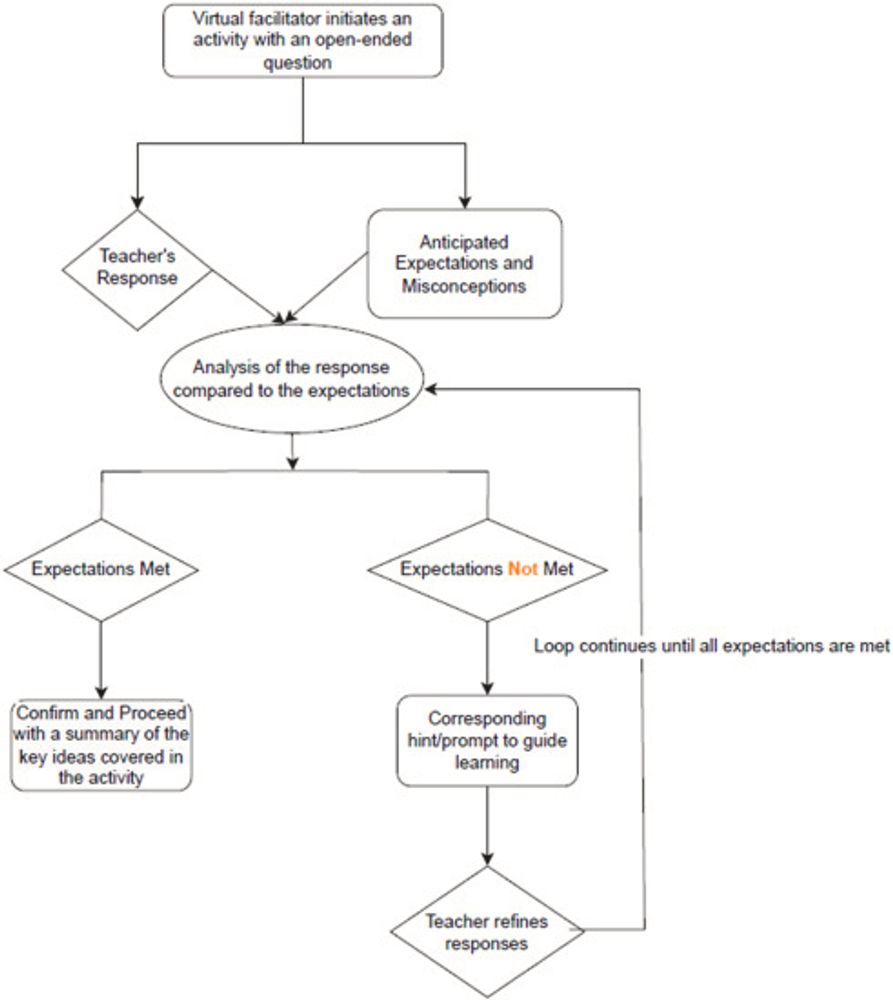
Here’s a paper whose publication date is March 2024. Given the publication date and typical reviewing, editing and processing time, my guess is the paper was written and submitted no later than June of 2023 (more likely much earlier). The research began way way before access to ChatGPT. The research involves having teachers use an interactive PD program using natural language processing. The result, the authors claim, ended up in improved outcomes for these teachers’ students.
If you look at the actual PD program, as far as I can tell it’s pretty boilerplate adaptive stuff we’ve had since the ALEKS days of the early-2000s: Clippy but for education. It’s more algorithmic than intelligent.
But there’s no juice in 20 year-old adaptive learning technologies. Instead, the article gets promoted like this:
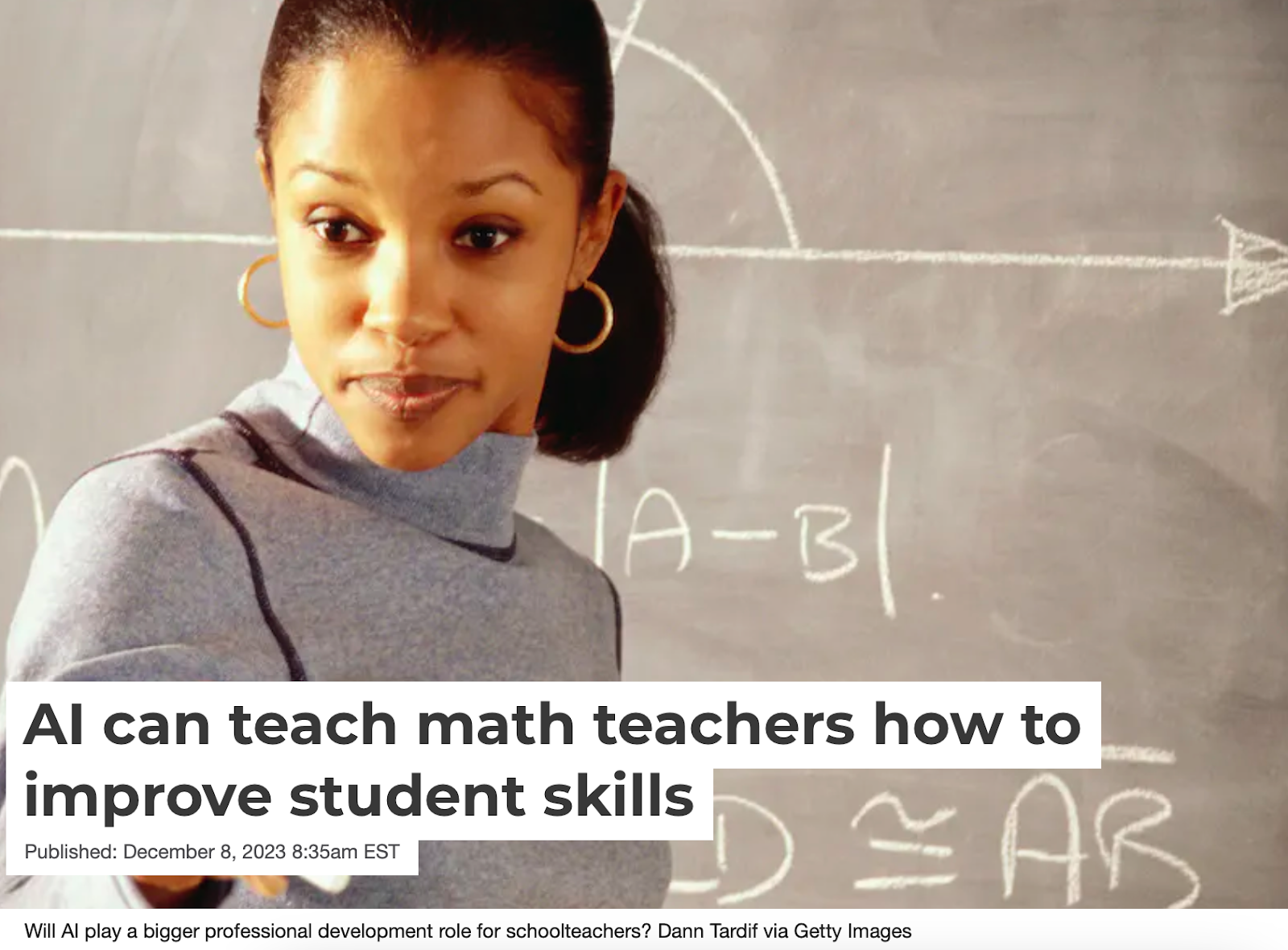
This is not to discount the PD or the gains achieved by students after the PD implementation, but just an example of how Education research is going to call everything “A.I.” Because that’s what the journals are asking for and that’s what the grant money is going toward.
If we’re calling these programs “A.I.,” then we’ve had A.I. since I got my first Nintendo and the ducks in Duck Hunt were trying to avoid my NES Zapper.
There most certainly will be robust research into A.I. in education on many fronts: learning platforms, professional development, data analysis, you name it. But be skeptical of research published in 2024.
Just as a slight epilogue, before I get way to out over my skis on a topic I’m frankly not super versed in, I do wonder about the long term viability of A.I. for educators, if only because the cost of A.I. in 2024 is so much higher than, say, a regular old search engine. Maybe it’ll be different and maybe I’m wrong, but once the Venture Capiltalist funding runs dry and A.I. is expected to actually generate money rather than siphon it away, it’ll have to be a paid-for service. Like everything Silicon Valley “invents,” it starts off free, then becomes cheap, then becomes expensive.
 emergent math